
Independent Eating for Toddlers: What Parents Can Learn from Global Trends
Go online, and you'll see those super cute videos of toddlers feeding themselves. They're confidently clutching spoons, tasting new textures, making adorable messes, and flashing proud smiles. These clips, often from Western accounts, show kids pushed toward independence young. They pour their own water, decide when they're full, and even help set up their plates.
For Indian parents, especially in joint or traditional families, these videos feel inspiring yet unrealistic. Indian culture is so nurturing; feeding your child is an act of pure love. Grandparents chasing toddlers with food is a family ritual! We worry about spills, picky eating, a slow pace, and the deep-seated belief that kids won’t eat enough on their own.
But what if we could find a happy medium? What if independent eating could adapt to Indian families—without losing that warmth, care, or our cultural values?
Here at Modern School Early Years, Deepali, we want to show you how to gently start this at home, while staying connected to our wonderful roots.
Why Independent Eating Matters
Independent eating isn't about suddenly "leaving children to do everything alone." No! It’s about giving them age-appropriate responsibility, sparking curiosity, and letting them actively explore food instead of being passively spoon-fed.
The benefits are huge. When kids feed themselves, they develop much better motor skills—gripping bowls, holding spoons, using tiny fingers mindfully. This also enhances sensory development as they touch and feel the food.
Surprisingly, it often leads to a greater willingness to try new foods, and it significantly reduces those dreaded mealtime power struggles. Best of all, they develop improved awareness of hunger and fullness cues. These are the foundations championed by many of the best kindergartens in India, where mealtimes are seen as rich opportunities for growth, not just basic nutrition. This idea also aligns with our approach at Modern School Early Years.

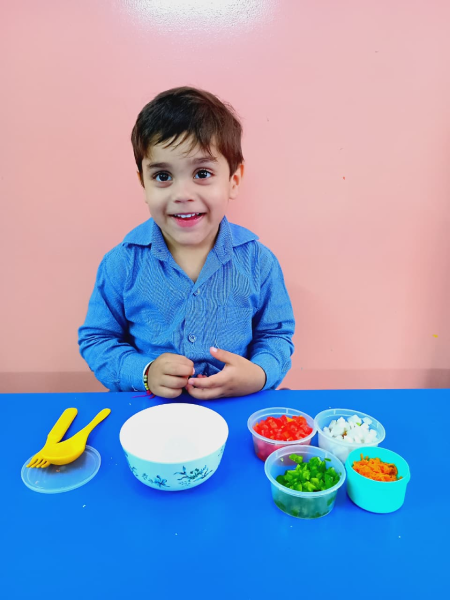
Indian Culture & Independent Eating: A Balanced Approach
Indian families often hesitate because the concerns are so valid. We hate the mess. We worry the child will simply not eat enough. We want to ensure they get nutritious food. And for our elders, feeding is seen as a vital bonding moment.
Independent eating, however, does not mean abandoning support; it just means offering children guided freedom.
A culturally comfortable starting point is simply to let the child feed themselves for the first 10 to 15 minutes of the meal. Then, you can step in gently only if truly necessary. Make sure you're offering finger foods that reflect our Indian meals—soft, bite-sized rotis, small idlis, or chunks of steamed veggies. The most important thing is to avoid pressure or those relentless "one more bite" battles. By doing this, children get a taste of autonomy while parents remain comfortable.
How Parents Can Start Independent Eating at Home
Predictable Mealtimes: The first step is to make mealtimes predictable. Toddlers feel secure when they know what's coming. That means having fixed times, ensuring a comfortable seating arrangement, and sticking to a simple routine.
Child-Friendly Portions: Next, you must offer child-friendly portions. Small servings prevent them from feeling overwhelmed. Let them ask for more—that gives their communication skills a little boost!
Encourage Finger Foods: Before you reach for the spoon, encourage finger foods first. These are the easiest entry points to independence: soft fruits, bite-sized pieces of roti, or steamed vegetables. Once they gain confidence with their hands, you can slowly introduce the spoon.
Embrace the Mess: Mess is a necessary part of this learning process; toddlers learn through touch, smell, and feel. Also, be a role model. Sit and eat your meal calmly with them. Children are amazing mimics. When they see you enjoying your food peacefully, they’re far more likely to do the same.
Avoid Screen Time: Screens distract the brain, disconnecting it from its natural hunger cues. Since independent eating is all about mindful eating, screens totally undermine that goal.
Praise the Effort: Finally, remember to praise their effort, not perfection. Instead of complaining, "You're making such a big mess," try saying something like, "You're trying so hard! I'm proud of you for holding that spoon." This simple change builds confidence and turns mealtime from a stressful event into a joyful one.
How Schools Play a Role
At Deepali, the best playschool in Delhi NCR, our trained educators gently work to encourage crucial habits. They help children hold their spoons correctly, learn to sit at the table for appropriate durations, explore different food textures, and even start to share mealtime responsibilities with their peers. This subtly builds patience and social eating skills.
These habits are quiet but powerful. Parents constantly tell us they see a difference at home—children become more patient, curious, and much more willing to try new things.
Conclusion
Independent eating isn’t about just copying viral social media trends or disrespecting Indian traditions. It's about giving your toddler the freedom to try, the confidence to fail, and the opportunity to grow.
When parents and educators genuinely work as a team, children learn to eat with curiosity, joy, and profound confidence. And that's truly a gift they carry with them for their entire lives. Our unique perspective towards these topics is one of the reasons why you should choose us as the foundational step in your preschooler’s life.
